

Quick answer: You can start a faceless YouTube channel at $0 — free script AI, Kokoro or TTSMaker for voice, stock footage, CapCut — and go from niche idea to published video in under an hour per video once your template is set. The real cost is time: plan on 6–12 months of consistent publishing to reach monetization (1,000 subscribers + 4,000 watch hours), and start with Shorts before graduating to long-form. The biggest beginner mistake is generic scripts — viewers forgive average visuals, not boring narration.
What “Faceless YouTube” Actually Means
A faceless YouTube channel grows on voice, visuals, and editing instead of your face. There’s no camera, no studio, and no on-screen presence. Just narration over visuals with captions.
And it’s one of the fastest-growing content categories on the platform. History explainers, finance breakdowns, true crime narrations, motivation compilations, tech news, all thriving without a single human face on screen.
With AI, you can now go from a niche idea to a published video without filming anything. The whole loop can run in under an hour per video once your niche and template are set. This is the complete blueprint.
The 6-step blueprint at a glance:
| Step | Focus | The key decision |
|---|---|---|
| 1. Niche | Pick where value is information, not personality | Must sustain 100+ videos; finance pays the most |
| 2. Scripts | Hook in 15 seconds, 3–5 points, curiosity loops | Direct the AI well; generic prompts kill channels |
| 3. Voiceover | Audition 4–5 voices before committing | Free (Kokoro, TTSMaker) to $6/mo to $22/mo |
| 4. Visuals | Pick one style and stay consistent | AI video, AI images + motion, or stock mix |
| 5. Assemble | Captions mandatory, fast pacing, strong thumbnails | Click-through rate is half the battle |
| 6. Publish | Titles, AI disclosure, cadence, playlists | 3 Shorts/week or 1 long-form/week |
Prices verified: October 2026.
Step 1: Pick a Profitable Niche (This Decides Everything)
The niche decides your ceiling. Faceless works best where the value is in information, story, or visuals rather than personality. The proven winners:
- Finance and wealth: highest ad rates, endless topics
- History and documentaries: evergreen, bingeable
- Psychology and self-improvement: massive audience
- Tech and AI news: fast-moving, always fresh
- True crime and mysteries: obsessive audiences
- Motivation: simple to produce, huge volume
- Scary stories / horror narration: loyal niche communities
- Listicles and explainers: “10 things you didn’t know about…”
Two rules. First, pick something you can make 100+ videos about without running dry. Second, consider advertiser demand: finance pays far more per thousand views than general entertainment. A smaller finance channel can out-earn a bigger gaming channel. It’s simple economics.
Most successful faceless channels in 2026 start with Shorts and graduate to long-form once they find a winning format. Shorts are cheap to make and fast to test, which makes them the ideal laboratory; long-form is where the real business gets built.
Step 2: Write Scripts That Hold Attention
Here’s where most AI channels die. Generic ChatGPT prompts produce robotic scripts that viewers abandon in 30 seconds. The fix isn’t better AI, it’s better direction.
A faceless script needs three things:
- A hook in the first 15 seconds that promises specific value. Never start with “Welcome back to the channel.” Start with the peak conflict, the surprising statistic, the open loop. “In January 2008, a rogue trader cost his bank €4.9 billion in unauthorized trades. Here’s how.”
- A clear structure. Three to five points with subheadings. Each section ends with a curiosity loop that pulls the viewer into the next one.
- A close that asks for the subscribe and previews the next video.
Try this prompt architecture with Claude or ChatGPT:
“Write a 1,500-word YouTube script on [topic]. No corporate jargon, no generic introduction. Start immediately with a pattern interrupt. Insert a story-driven curiosity loop every 45 seconds to maintain retention.”
Claude tends to write more natural narration cadence; ChatGPT is faster for volume. Either works if you direct it well. Aim for 60–90 seconds of script for Shorts, 5–10 minutes for long-form.
Step 3: Generate the Voiceover
Your voice is your channel’s identity. Audition 4–5 options before committing, because once you ship 10 videos with a voice, switching confuses your audience.
The options, cheapest to premium:
- Free: Kokoro TTS (open-source, runs locally), Edge Read Aloud, TTSMaker. Surprisingly decent for Shorts.
- Budget: ElevenLabs Starter ($6/month) for commercial rights and much more natural delivery.
- Pro: ElevenLabs Creator ($22/month) with Professional Voice Cloning. Clone your own voice once, narrate forever.
Match the voice to the content. A finance explainer wants calm authority. True crime wants low, deliberate pacing. Motivation wants energy. The wrong voice in the right niche still fails.
Pro tip: ElevenLabs’ v4 model (launched September 2026) reads direction tags like [whispers] or [dramatically] in your script even more reliably than v3 did. A little direction goes a long way toward not sounding like a robot reading Wikipedia.
Step 4: Create the Visuals
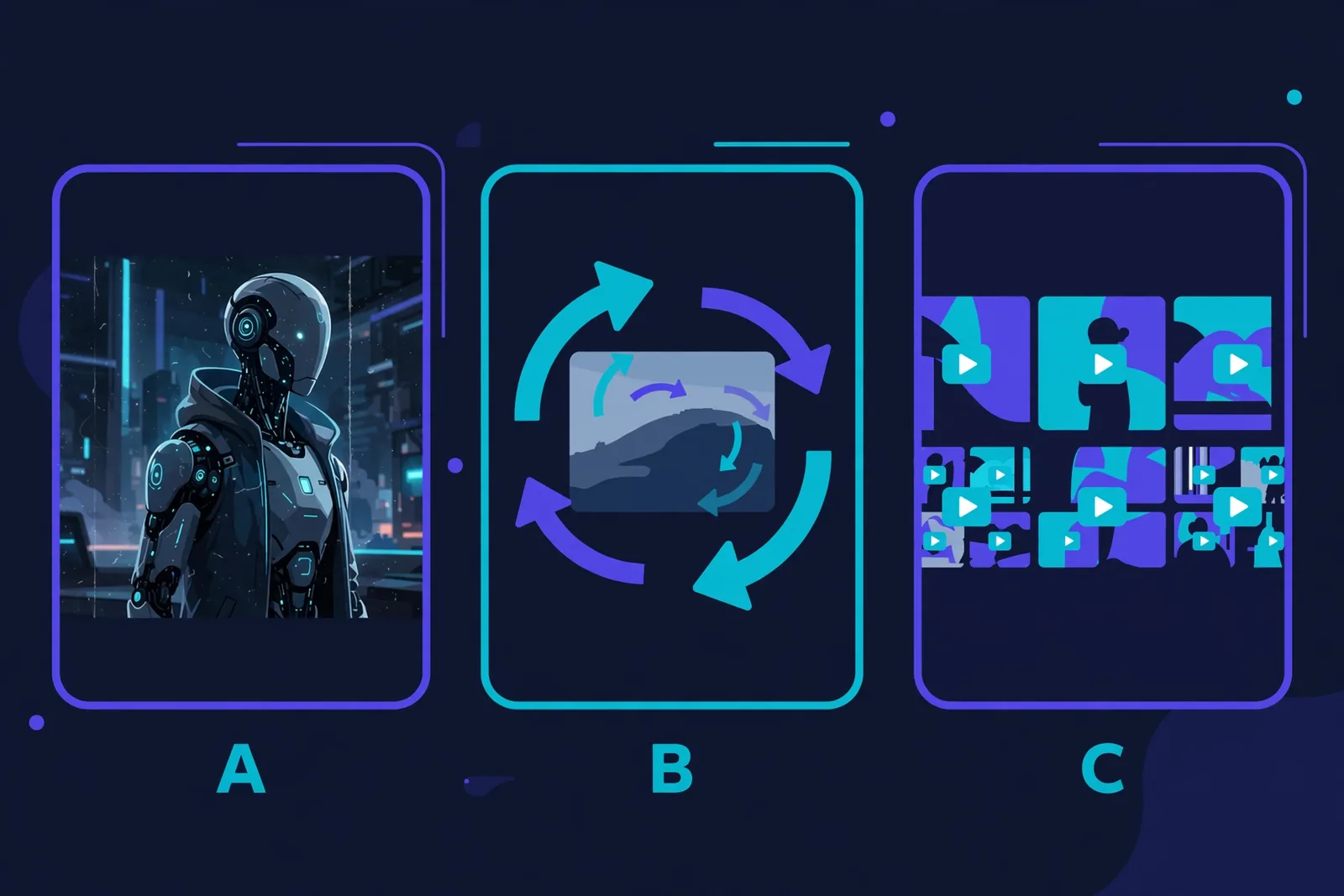
You have three visual styles to choose from. Pick one and stay consistent; visual identity is branding.
Style A: AI-generated video. Tools like Runway, Pika, Kling, or Veo generate motion from your prompts. Best for cinematic, original visuals. Generate 4–6 clips of 10–15 seconds for a Short; 20–30 clips for a 5-minute long-form, then stitch.
Style B: AI images with motion. Generate stills with Midjourney, Flux, or Leonardo, then add Ken Burns effects (slow zoom/pan) in editing. Far cheaper than video generation and, for narration-driven content, viewers barely notice the difference.
Style C: Stock footage + AI images. Mix Pexels/Pixabay footage with AI-generated scenes. Fastest to produce, zero generation cost.
For character-driven channels (talking avatars, recurring hosts), use a character reference image as the seed for every video to maintain identity. Consistency builds familiarity, and familiarity builds subscribers.
Step 5: Assemble, Caption, and Polish
This is where amateur and professional faceless channels separate.
Captions are mandatory. A huge share of mobile viewers watch on mute. Use dynamic word-by-word captions (TikTok style) in CapCut, which is free and excellent. YouTube’s auto-captions work but edit them for accuracy.
Pacing. Fast cuts, B-roll over every claim, sound effects on transitions. Watch a top channel in your niche and count the cuts per minute. Then match it.
Music. YouTube’s audio library is free and safe. For AI-generated music, Suno or similar tools work, but verify licensing for monetized content (free tiers almost never include commercial rights).
Thumbnails. Arguably more important than the video itself. Bold text (3–4 words max), high contrast, one focal emotion. Generate backgrounds with AI, add text in Canva. Test relentlessly; click-through rate is half the battle.
Step 6: Publish Like You Mean It
- Titles: Promise a specific outcome or spark curiosity. “How One Rogue Trader Cost His Bank €4.9 Billion” beats “The Story of Jérôme Kerviel.”
- AI disclosure: YouTube requires the AI-content label for realistic synthetic content. Use it on the upload screen. It’s not optional, and it doesn’t hurt reach.
- Cadence: Three Shorts per week or one long-form per week is a solid starting rhythm. Consistency beats intensity.
- Playlists: Organize by series. Playlists drive session time, and session time drives the algorithm.
The Realistic Timeline
Forget the “get rich in 30 days” gurus. Here’s what actually happens:
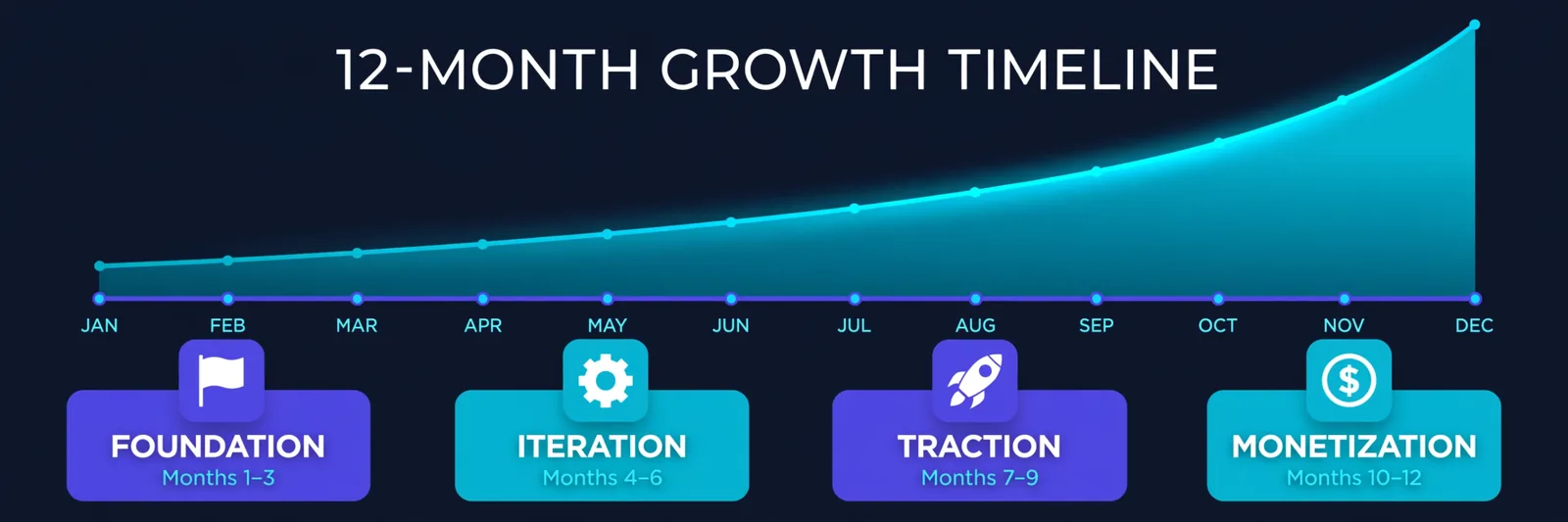
- Month 1: Foundation. Niche locked, pipeline built, first 2–4 long-form videos and 15–20 Shorts published. You’re learning, not earning.
- Months 2–3: Iteration. Analytics tell you what works. Double down on winning formats, kill the rest. Watch CTR and average view duration obsessively.
- Months 4–6: Traction. If the niche and format are right, this is when growth compounds. Most channels that quit do it in month 2. Don’t be most channels.
- Months 6–12: Monetization territory. YouTube Partner Program needs 1,000 subscribers and 4,000 watch hours (or 10M Shorts views). Realistic for a consistent faceless channel in a decent niche.
Set a 12-month commitment. Evaluate quarterly, not daily.
The Costs (Honest Numbers)
You can start at literally $0: free script AI, Kokoro or TTSMaker voice, free stock footage, CapCut editing. Per-video cost: pennies.
A comfortable mid-tier stack runs ~$30–50/month: ElevenLabs Starter or Creator for voice, a video generation subscription for hero visuals, CapCut Pro for editing. That’s a complete production studio for less than a dinner out.
The real cost isn’t money. It’s the 6–12 months of consistent publishing before the algorithm trusts you. Most people won’t pay that price. That’s your edge.
The Mindset That Separates Winners
The channels that make it treat their first 20 videos as practice, not product. They publish, study the analytics, and adjust. The channels that quit treat video three’s low views as a verdict. It isn’t one. It’s just feedback about what to change.
FAQ
Can you really make money with a faceless YouTube channel?
Yes. Revenue comes from YouTube ads (RPM varies hugely by niche; finance pays far more than entertainment), plus affiliate links, sponsorships, and digital products. It’s a real business model, not a gimmick.
Do I need to show my face at all?
No. That’s the entire point. Voice, visuals, and editing carry the channel.
Does YouTube penalize AI-generated content?
YouTube requires disclosure of realistic synthetic content via the AI-content label, but doesn’t penalize it in recommendations for following the rules. Low-effort spam gets penalized; quality AI-assisted content does fine.
Should I start with Shorts or long-form?
Start with Shorts for fast iteration and format testing, then graduate to long-form once you find what works. Long-form earns more per view and builds deeper audiences.
How long until a faceless channel gets monetized?
Realistically 6–12 months of consistent publishing. You need 1,000 subscribers plus 4,000 watch hours or 10M Shorts views for the Partner Program.
What’s the biggest mistake beginners make?
Generic scripts. Viewers forgive average visuals; they don’t forgive boring narration. Invest your energy in hooks, pacing, and storytelling, not just prettier AI clips.
Keep reading:
– 10 Best Free AI Video Generators in 2026
– 10 Best Free AI Text-to-Speech Tools in 2026
– How to Use AI Voiceover for YouTube Videos
[…] How to Start a Faceless YouTube Channel with AI (2026 Blueprint) […]