

Quick answer: Midjourney is still the best pure AI image generator you can buy, but you pay from image one — plans run $10 to $120/month with no free tier, and generations are public by default. Budget a weekend of learning prompt craft, because casual prompting gets casual results here. Skip it if you need reliable text in images, an API, or zero learning curve. Rating: 4.6/5.
I’ve generated thousands of images in Midjourney. The featured images across this entire site came out of it. I’ve also watched it mangle hands, misspell words, and eat $30 of GPU time producing images I deleted in seconds. This review is the honest accounting: what Midjourney is genuinely the best at, where it frustrates, and whether you should pay for it in 2026.
Short answer: if image quality is your job, yes, it’s still the king. If you need anything else (text in images, an API, a free tier, privacy), keep reading, because the caveats are real.
What is Midjourney?
Midjourney is a text-to-image AI generator run by a small independent lab (not a tech giant, which is unusual and worth knowing). You type a description; it returns four images. That’s the core product, and it’s been refining that single trick since 2022 while competitors sprawled into chatbots and video suites.
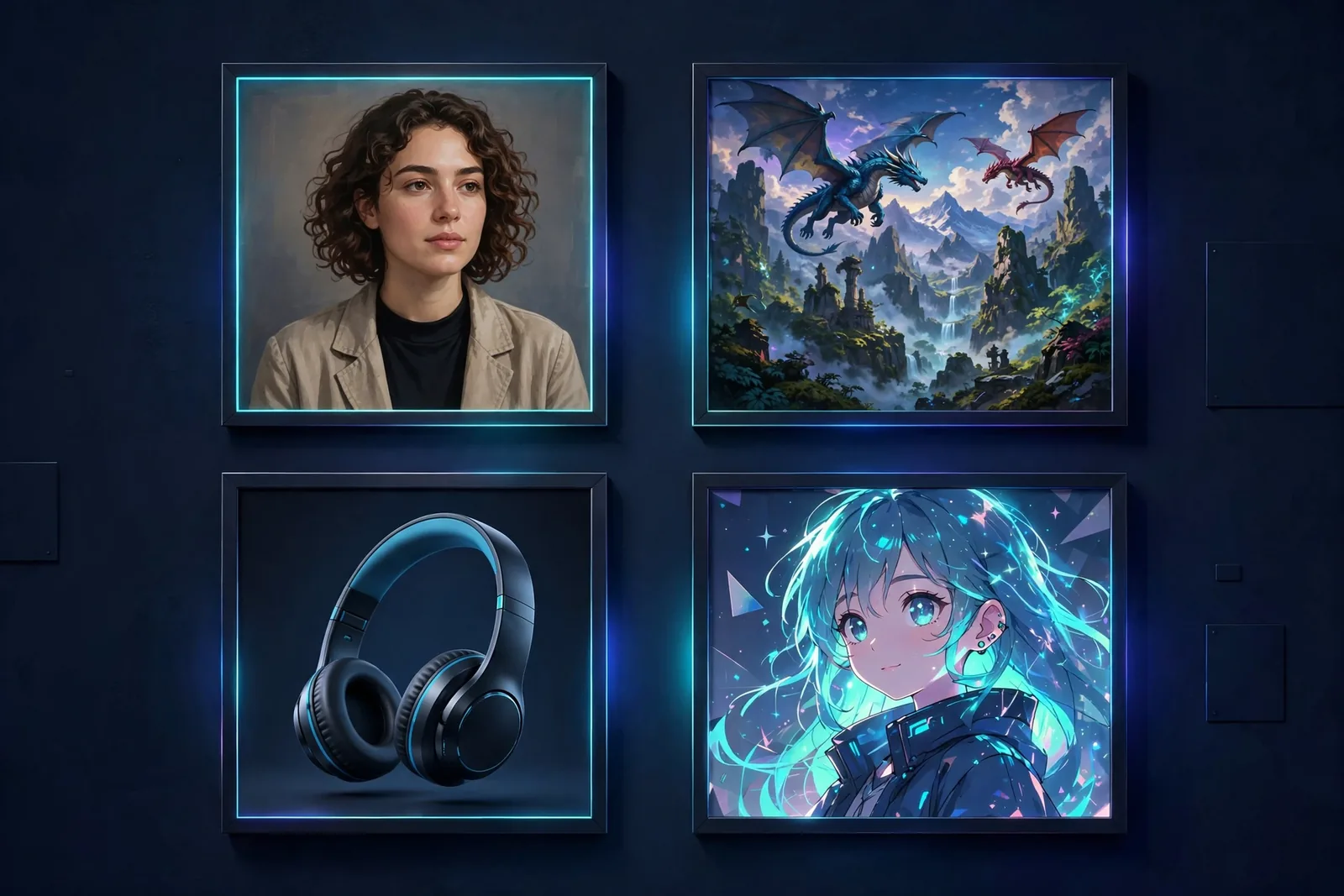
The current models (the V8 line took over as default in mid-2026, with native 2K rendering and much faster generation; V7 remains selectable for workflows built around it) produce images with a signature look: cinematic lighting, rich texture, composed like someone art-directed the shot. You can spot a Midjourney image the way you can spot a Wes Anderson film. There’s a house style, and it’s gorgeous.
No free tier exists. The free trial died in 2023 and never came back. You’re paying from image one, plans run from $10/month (Basic) up to $120/month (Mega) depending on how much generation time you need, with annual billing roughly 20% cheaper. That paywall-before-you-try-it model is Midjourney’s boldest and most annoying decision.
How does Midjourney score across categories?
| Category | Score | Notes |
|---|---|---|
| Image quality | 9.5/10 | Still the aesthetic benchmark |
| Style range | 9/10 | Photoreal to anime to painterly |
| Ease of use | 7/10 | Web app fixed the Discord pain |
| Text in images | 4/10 | Better than before, still unreliable |
| Pricing value | 7/10 | Fair for pros, steep for dabblers |
| Privacy | 4/10 | Public by default — see below |
| API/developers | 2/10 | No official API, period |
Overall: 4.6/5, the best pure image generator you can buy, with asterisks that matter.
What is Midjourney genuinely the best at?
Photorealism with soul. Not just “looks like a photo,” looks like a photo someone meant to take. The lighting has intent. Skin has texture instead of that airbrushed AI sheen. I’ve replaced actual stock photography with Midjourney outputs and had designers ask which photographer shot them.
Artistic range. It understands art movements the way a trained illustrator does, not as filters but as languages. Art nouveau, ukiyo-e, brutalist photography, 70s sci-fi paperback covers. The style vocabulary is the deepest of any generator I’ve tested.
Character consistency. The character-reference feature locks a face across dozens of generations: different poses, outfits, scenes, same person. For comics, brand mascots, or social series, this is the killer feature nobody else matches.
The community gallery. Underrated: Midjourney’s public Explore feed is a masterclass you can browse. See an image you love, copy its prompt, learn how it was built. I learned more about prompting from two weeks of browsing the gallery than from any tutorial.
What actually happens in your first month with Midjourney?
Nobody tells you this, so I will. Your first 50 generations will be disappointing. You’ll write “a beautiful sunset” and get something pretty but generic, and you’ll wonder what the fuss is about.
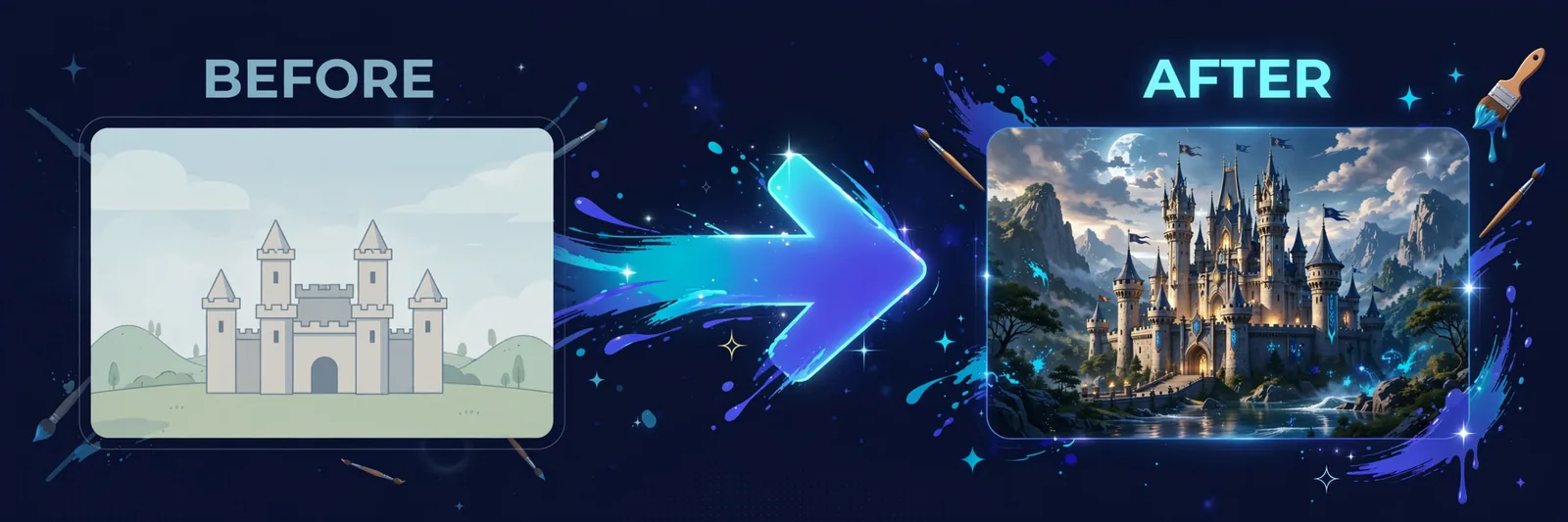
Around generation 100, something clicks. You learn that Midjourney rewards specificity about lighting and lens more than about subjects. That aspect ratio parameters change everything. That style references (–sref) are the cheat code. That “photorealistic” is a weak prompt word and “shot on 85mm, golden hour, shallow depth of field” is a strong one.
By month two, you’re producing images that make people ask what camera you used. The learning curve is real, so budget a solid weekend of experimentation. It’s the difference between a $10 subscription that frustrates you and one that feels like a superpower. Midjourney rewards skill, and honestly, it demands it. Casual prompting gets casual results.
Did the web app fix Midjourney’s worst part?
Old-timers remember the Discord era: generating images in a chaotic public chatroom via slash commands. It was awful and wonderful in equal measure. That’s over. The web app is now the full experience: generation, editing, organizing into folders, moodboards, personalization profiles. No Discord needed, no commands to memorize.
Discord still exists as a community hangout, and some diehards prefer it. But if “I don’t want to learn Discord” was your reason for avoiding Midjourney, that excuse expired.
Is Midjourney’s video feature worth it?
Midjourney’s V1 video model (launched June 2025) animates a still image into a 5-second clip, extendable to 21 seconds. It’s fun, a still image that breathes. But it’s not a video tool: no audio, no real timeline control, 480p by default, nothing approaching what dedicated video generators do. Treat it as a delightful extra, not a buying reason. If video is the job, buy a video tool.
Where does Midjourney fall short?
Text rendering. Ask for a poster reading “GRAND OPENING” and you might get “GRAND OPNEING.” It’s improved, but for anything where text must be correct (thumbnails with titles, logos, infographics), use DALL-E or Ideogram instead. This is Midjourney’s most legitimate weakness.
No API. Developers, look away. There’s no official API, which means no integrating Midjourney into your app or automated workflow. Everything is manual: generate, download, drag into your project. For product teams, that’s disqualifying.
Public by default. Every image you generate is visible in the public gallery unless you pay for the Pro tier’s Stealth Mode. Client concepts, unreleased products, anything sensitive, think twice on the cheaper plans. I find it strange that privacy costs extra, but it is what it is.
No free tier. You cannot try before you buy. In 2026, when every competitor has a free plan, asking for money upfront is a genuine barrier, especially since your first 50 images will be mediocre while you learn.
The learning curve. Worth repeating: this tool punishes casual use. If you want “type a sentence, get a good image” with zero learning, DALL-E inside ChatGPT will make you happier.
Who should buy Midjourney (and who shouldn’t)?
Buy it if: you’re a marketer, designer, content creator, or illustrator who needs standout visuals regularly; you do concept art, thumbnails, or editorial imagery; you’re willing to invest a weekend learning prompt craft; you generate 50+ images a month.
Don’t buy it if: you need text in your images (get DALL-E or Ideogram); you need an API (get DALL-E or Flux); you generate fewer than 20 images a month (free tools cover you); you need private generations but won’t pay for Pro; you want zero learning curve.
The one-line test: if you’ve ever looked at an AI image and thought “that’s nice but it looks like AI,” Midjourney is the tool that fixes that feeling. If you’ve never had that thought, you don’t need it yet.
How much does Midjourney cost in 2026?
Plans are tiered monthly subscriptions based on GPU time: Basic at $10/month, Standard at $30, Pro at $60, Mega at $120 (per Midjourney’s pricing page, with annual billing roughly 20% cheaper). The sweet spot for most creators is the middle tier: enough fast generation for daily use plus unlimited slower generations for experimentation.
Is it worth it? Do the per-image math for your volume. At 200 images a month on the base plan, you’re paying pennies per image for the best quality available. At 10 images a month, you’re overpaying, so use free alternatives and come back when volume justifies it.
Prices verified: October 2026.
Frequently Asked Questions
Is Midjourney worth it in 2026?
For anyone whose work depends on visual quality (marketers, designers, creators, illustrators), yes, it’s still the best pure image generator. For casual use, text-heavy graphics, or API needs, the free and cheaper alternatives win.
Does Midjourney have a free trial?
No. The free trial ended in 2023 and hasn’t returned. You pay from your first image. The one exception: the niji・journey mobile app gives eligible new users 20 free image generations, per its official help center, though it runs the anime-tuned niji model rather than the main one.
Is Midjourney better than DALL-E?
For image quality and artistic output, yes. For ease of use, text rendering, prompt accuracy, and API access, DALL-E 3 wins. We compared them head-to-head in detail, and most professionals end up using both.
Are my Midjourney images private?
Not by default. Generations appear in the public gallery unless you’re on the Pro plan or higher with Stealth Mode enabled. Don’t generate anything confidential on cheaper plans.
Can Midjourney generate videos?
Short ones: 5-second clips from a still image, extendable to 21 seconds via the V1 video model. It’s a nice bonus feature, not a replacement for real video tools.
What’s the best Midjourney alternative that’s free?
Leonardo AI (daily free credits, good control), Ideogram (best free text-in-image), and DALL-E via ChatGPT’s free tier. None fully match Midjourney’s aesthetic quality, but all are genuinely useful.
The Verdict
Midjourney is still the best AI image generator you can buy. Not the easiest, not the cheapest, not the most versatile, but the best at the thing it does. It rewards obsession: the more you learn its language, the more it feels like a creative partner instead of a slot machine.
Four years in, with real competition finally nipping at its heels, that crown is less secure than it was. But as of today, when I need an image that makes someone stop scrolling, I still open Midjourney first.
Rating: 4.6/5, essential for visual professionals, overkill for everyone else.
Affiliate disclosure: this is an independent review. If Midjourney links on this page earn us a commission, it costs you nothing and never influences our verdicts.
Curious how it stacks up directly? Read our Midjourney vs DALL-E showdown, or browse the free alternatives if the subscription gives you pause.
[…] Midjourney Review: Is It Still the Best AI Image Generator? […]
[…] Midjourney Review: Is It Still the Best AI Image Generator? […]
[…] Midjourney Review: Is It Still the Best AI Image Generator? […]
[…] Midjourney Review: Is It Still the Best AI Image Generator? […]