

Quick answer: Start with Leonardo AI — it’s free (150 daily tokens), runs in a normal web dashboard, and teaches you prompting without spending a dollar. Add Midjourney at $10/month when your hero images still lack the wow factor, because on raw aesthetic quality it remains the benchmark. Most working creators end up routing different jobs to each: Leonardo for controlled production work, Midjourney for standout creative pieces.
Ask “Leonardo or Midjourney?” in any creator community and you’ll get a war. Threads with hundreds of replies, strong opinions, and very little light. The truth both sides miss: these tools aren’t really substitutes. Leonardo AI is a production and control platform, free to start, precise, packed with editing tools. Midjourney is a creative quality platform, where you describe and it delivers gallery-worthy art with no configuration needed.
For beginners, that distinction makes the choice clearer than any feature table. Let’s walk through it.
Affiliate disclosure: this comparison is independent. If you subscribe via our links, we may earn a commission at no extra cost to you.
The Short Verdict
- Start with Leonardo AI if you’re a beginner. It’s free (150 daily tokens), runs in a normal web dashboard, and teaches you prompting without spending a dollar.
- Add Midjourney when you need maximum artistic quality, hero images, portfolio pieces, cinematic concepts, and you can justify $10/month.
- Most working creators use both, routing different jobs to each: Leonardo for controlled production work, Midjourney for standout creative pieces.
Leonardo AI vs Midjourney: how do they compare head to head?
Pricing and plan details below were checked against both vendors’ pricing pages in October 2026; they change, so treat numbers as a snapshot and confirm before buying.
| Leonardo AI | Midjourney | |
|---|---|---|
| Free plan | Yes, 150 tokens/day | No, starts $10/month |
| Interface | Web dashboard, sliders and settings | Web app (was Discord) |
| Image quality | Very good | Exceptional, the benchmark |
| Control | High: many built-in and community models, custom training, Canvas editing | Medium, prompt-driven |
| Character consistency | Built-in engine | Improving, less precise |
| Custom model training | Yes (LoRA on your images) | No |
| Built-in editing | Upscale, inpaint, outpaint, canvas | Basic variations and upscale |
| Video | Motion module (basic) | Yes, image-to-video (5s clips, extendable to ~21s; SD on Basic, HD on Standard and up) |
| Private generations | From ~$10/month tier | ~$60/month tier |
| Commercial rights | Yes, on paid plans | Yes, on paid plans |
| Best for | Beginners, production work, game art | Artists, hero imagery, concept art |
Prices verified: October 2026.
Why is Leonardo AI better for beginners?
It’s free to learn on. This is the whole game for beginners. 150 daily tokens buys roughly 20 to 30 basic generations per day, enough to learn prompting, test styles, and finish small projects without paying. Midjourney charges from day one, which means paying to learn. Our consistent advice to newcomers: learn the craft on Leonardo’s dime, then decide if Midjourney’s quality is worth your money.
Control teaches you faster. Leonardo’s model selector (Phoenix, PhotoReal, anime presets, community models), negative prompts, and dimension controls show you why an image looks the way it does. That feedback loop builds prompting skill fast. Midjourney’s black box doesn’t teach you anything; you get beautiful output and no idea how to reproduce the parts you liked.
It’s a complete workshop. AI Canvas for inpainting and outpainting, Universal Upscaler, background removal, and image-to-image editing all live in one dashboard. Beginners can generate and polish without a second tool. Compare that to the typical beginner journey elsewhere: generate somewhere, edit somewhere else, upscale in a third app.
Custom training is uniquely accessible. Train a LoRA on your own art style or product photos (paid tiers, from $12/month). For brand-consistent work, that’s invaluable, and it’s something Midjourney simply doesn’t offer. If you need the same character or product look across fifty images, Leonardo is the only real choice of the two.
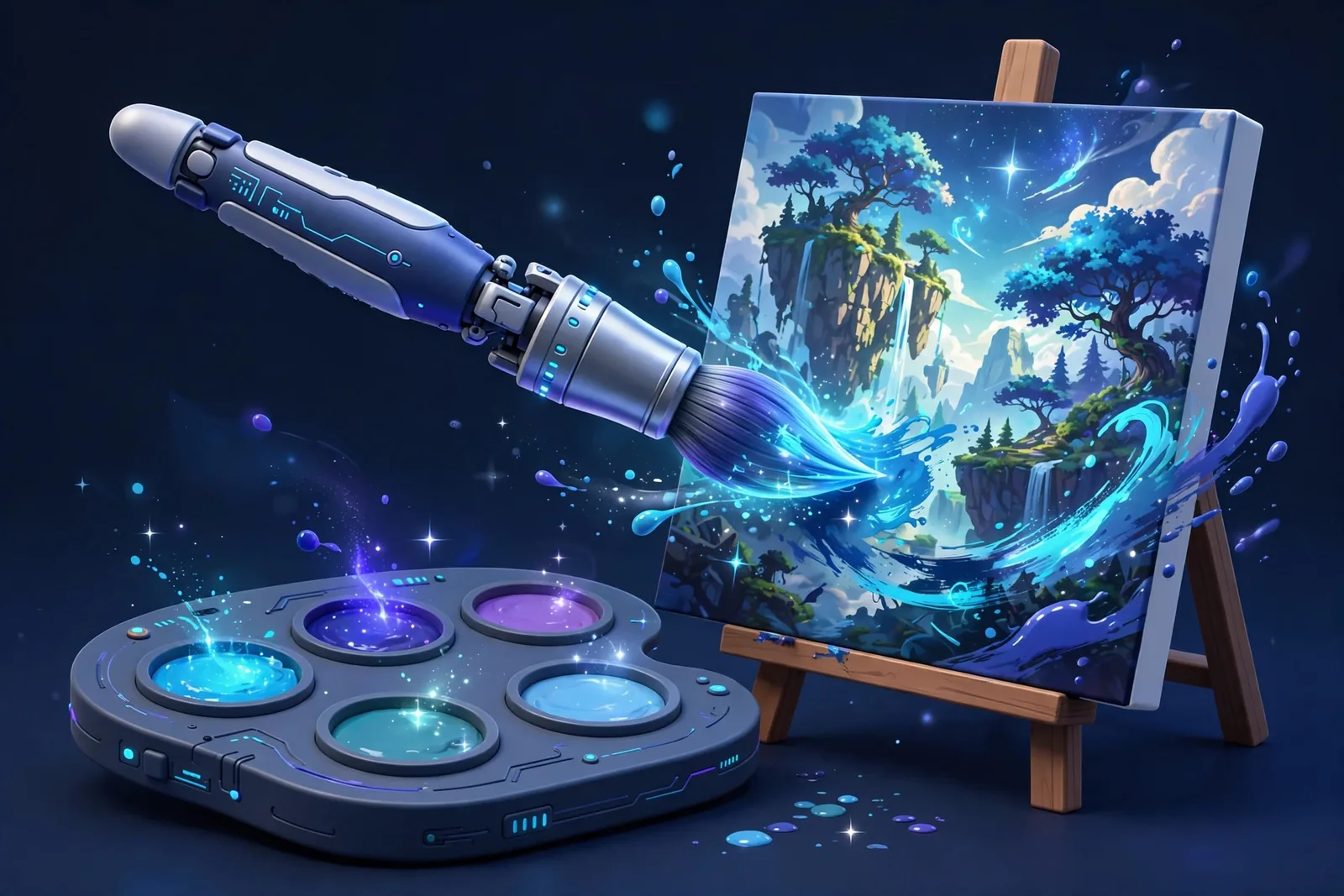
Where does Midjourney win?
Raw aesthetic quality. Give both tools the same prompt and Midjourney’s output is more often the one you’d frame. Cinematic lighting, painterly texture, compositional instinct. It remains the quality benchmark, especially for atmospheric and artistic imagery. This isn’t close, honestly. Leonardo is very good. Midjourney is the standard everything else is measured against.
Simplicity. Type a prompt, get art. No model selector paralysis, no token math. For pure creative exploration, less friction means more experimenting. Some people do their best work when the tool gets out of the way, and Midjourney gets out of the way.
Community and style discovery. Midjourney’s community gallery is an endless prompt-learning resource. See what others made, learn the phrasing, adapt it. It’s like a masterclass that never ends.
What are the honest limitations of each?
Leonardo’s limits: the token system punishes curiosity. Alchemy refinements and video eat tokens fast, so those 150 free tokens vanish quickly under heavy use. Free-tier images are public in the community gallery, with no privacy until you pay. Text rendering inside images remains unreliable. And the interface carries real complexity overhead for casual users who just want a nice picture.
Midjourney’s limits: no free tier at all. $10/month minimum just to try it. Generations on the basic plan are public, and private “stealth” mode costs around $60/month. And it’s a black box: when output misses, iteration is prompt-guessing rather than precise adjustment. That can be maddening.
What’s the best playbook for an AI image beginner?
Months 1 to 2: Learn free on Leonardo. Master prompting, try different models, build a small portfolio. Spend $0. Seriously. There’s no reason to pay while you’re still learning what a negative prompt does.
When you hit the wall: if your best Leonardo work still lacks the “wow” for hero images or client pieces, trial Midjourney for one month ($10). One month is enough to know whether the quality gap matters for your work. Watch what you actually use it for, not what you imagined you’d use it for.
Ongoing: route work by job. Leonardo for controlled, consistent, production imagery. Midjourney for standout creative pieces. Most serious creators we know run exactly this split, and it’s not a compromise. It’s using the right tool for the job.
A common question we hear: “won’t two subscriptions cost double?” In practice, no. Most beginners stay on Leonardo’s free tier for months while paying for Midjourney only when a project demands it, or vice versa. The real cost trap isn’t two tools. It’s paying for the expensive one before you’ve learned enough on the free one to use it well. Leonardo’s 150 daily tokens are basically a free education. Spend that education wisely before you open your wallet.
There’s also a skill-order argument here that we feel strongly about. Learning on Leonardo first builds prompting fundamentals: negative prompts, model selection, seed control, dimension ratios. Those concepts transfer everywhere. Starting on Midjourney teaches you to write pretty sentences and hope. When those fundamentals carry over to other tools later, you’ll be glad you learned them the structured way.
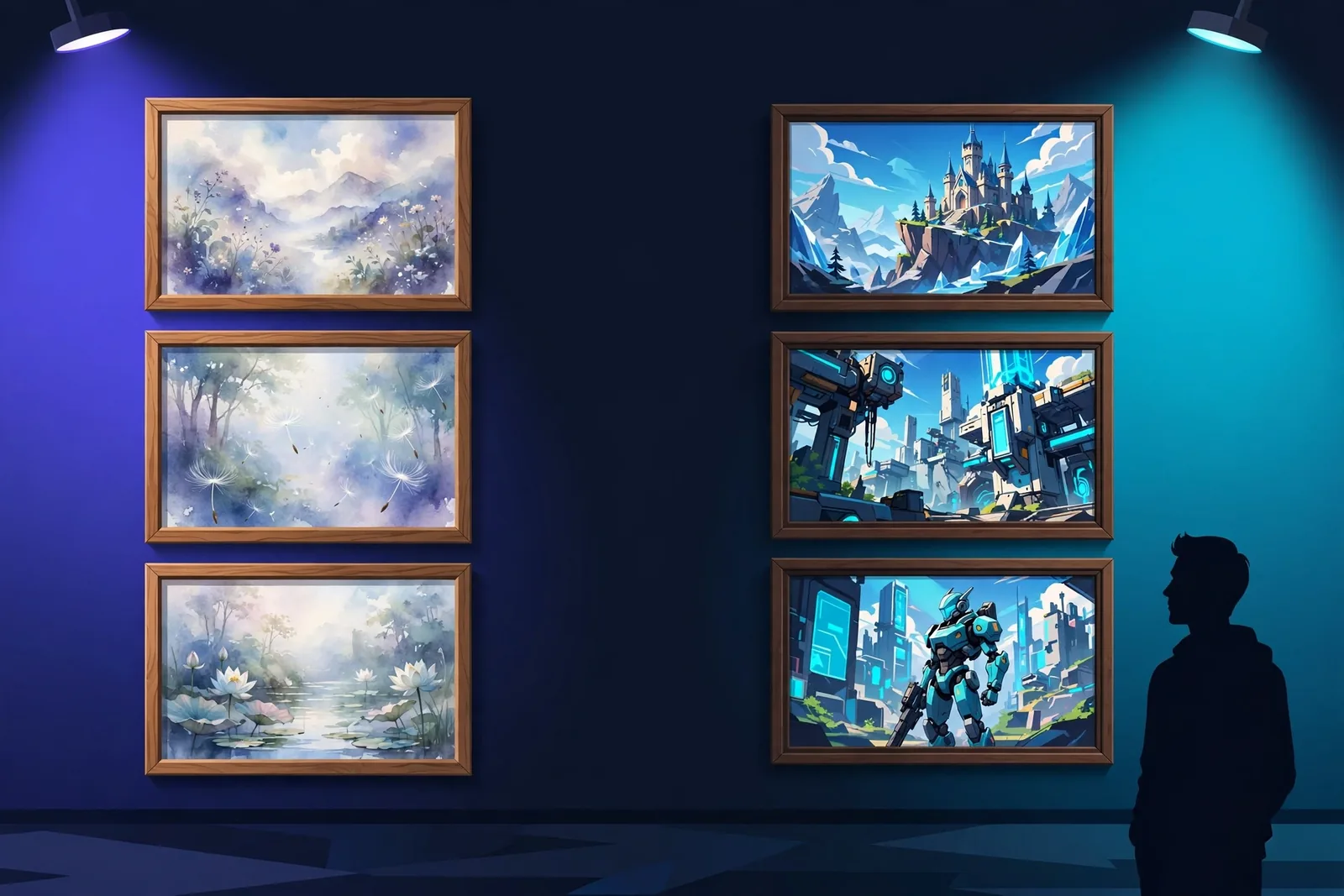
What Actually Decides Your Month-One Results
Everyone obsesses over which tool makes prettier images. Here’s what determines your results in month one: how fast you learn to speak the tool’s language. Midjourney rewards short, evocative prompts and parameter tweaks. Leonardo rewards detailed descriptions and careful model selection. Beginners who pick one tool and learn its dialect for two weeks outperform dabblers who switch every few days. Commitment beats comparison.
The second thing nobody mentions: your first 50 generations will be rough regardless of which tool you pick. That’s normal. Treat it as tuition and give yourself permission to burn credits learning, then judge the tool on generations 50 to 100, not 1 to 10.
Frequently Asked Questions
Is Leonardo AI better than Midjourney?
Neither is universally better. Midjourney leads on pure aesthetic quality; Leonardo leads on control, features, free access, and production workflows.
Does Midjourney have a free plan in 2026?
No. The free trial ended and there’s no free tier. Minimum $10/month. Leonardo’s 150 daily free tokens are the meaningful free option among major platforms.
Which is easier for complete beginners?
Leonardo’s dashboard is more guided (labeled controls, tooltips); Midjourney is simpler (just prompt). Both are approachable. Leonardo wins on learning value per dollar since it’s free.
Can I use generated images commercially?
Yes on paid plans for both (check current terms). Leonardo free-tier images are public gallery posts, so avoid confidential work there.
Which is better for consistent characters?
Leonardo. Its character consistency engine and custom LoRA training are built for exactly this. See our guide on consistent AI characters.
Should I pay for both?
Only when each earns its keep: Leonardo’s roughly $10 to $12 tier for private production work, Midjourney’s $10 tier for quality-critical pieces. Start free, upgrade on evidence.
Conclusion
Beginners should start with Leonardo AI. It’s free, instructive, and capable. Add Midjourney when your eye outgrows what free tools deliver. And remember the insight most comparisons miss: these aren’t rivals to choose between forever. They’re different instruments, and working creators play both.
Want the deep dive on Leonardo? Read our full Leonardo AI review. And if you’re exploring character work specifically, check our guide to consistent AI characters.
Keep reading:
– Leonardo AI Review
– Midjourney Review
– Consistent AI Characters Guide
[…] Leonardo AI vs Midjourney: Which Should Beginners Pick? […]